
Product Designer · UX Researcher
Designing products around how people actually behave.
I'm Bhavisha Ramtani. I use research to understand what people intend to do, where real-life friction gets in the way, and how design can make meaningful behavior easier — across Behavioral UX, EdTech, and human-centered products.
I'm most interested in the messy space between what people want to do and what they actually manage to do.
A two-minute introduction, in my own words.
My design lens
I look for the gap between intention and behavior.
People rarely experience products in ideal conditions. They're busy, interrupted, overwhelmed, or out of momentum. My work starts by understanding those conditions before deciding what to design.
- 01Research should change a decision.
- 02Design for real-life constraints.
- 03Make meaningful behavior easier.
Intention
What people set out to do
Behavior
What they actually do
Friction
What gets in the way
Insight
Why it happens
Design decision
What I change
Outcome
What shifts because of it
A few problems I've worked on.
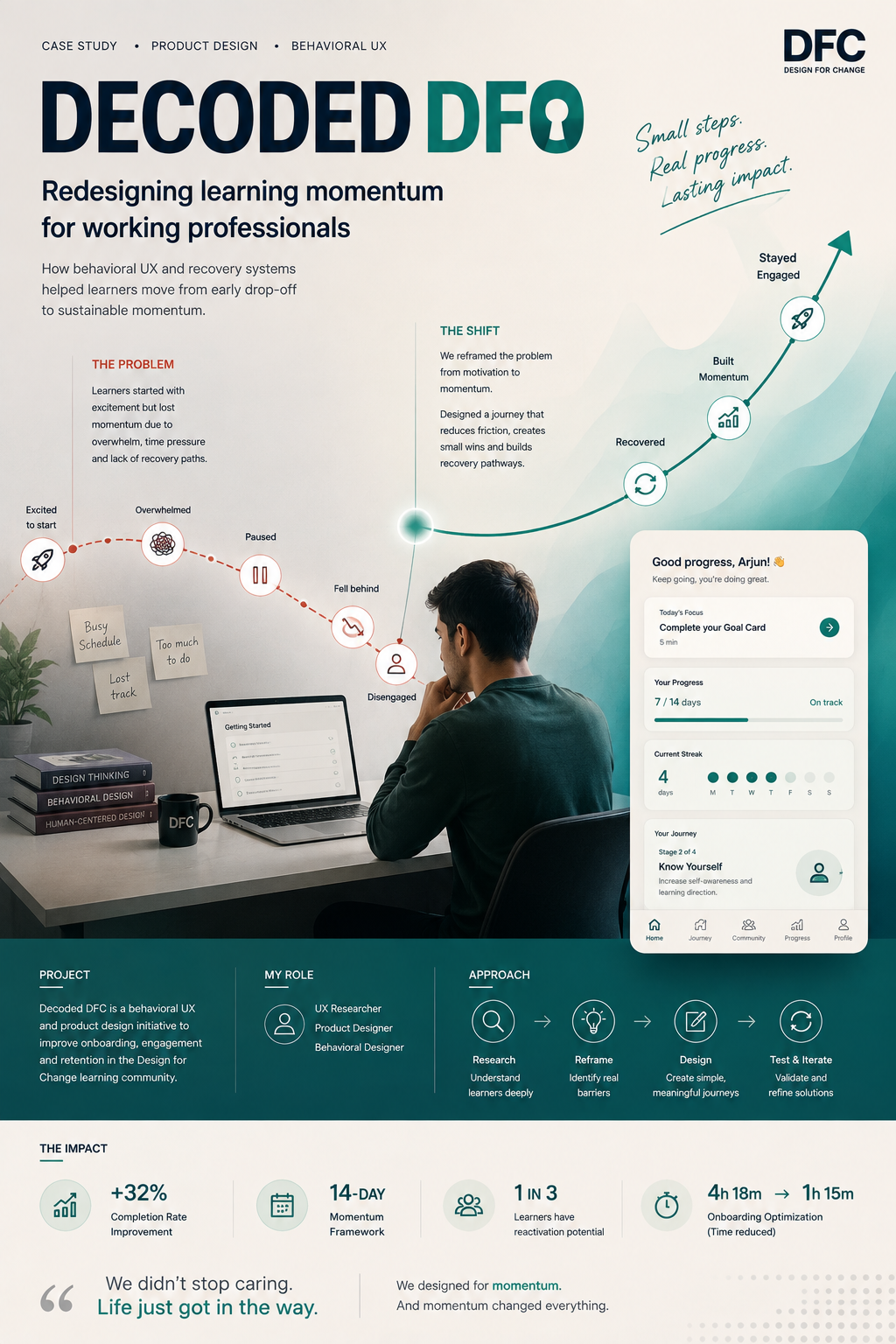
Decoded DFC
EdTech · Learning Experience · Behavioral UX
- Problem
- Learner disengagement during the first week of onboarding.
- Evidence
- 68% Week-1 drop-off identified.
- Design response
- A 7-day onboarding reframed into a 14-day momentum journey with four structured learning stages.
- Outcome
- +32% completion rate improvement.
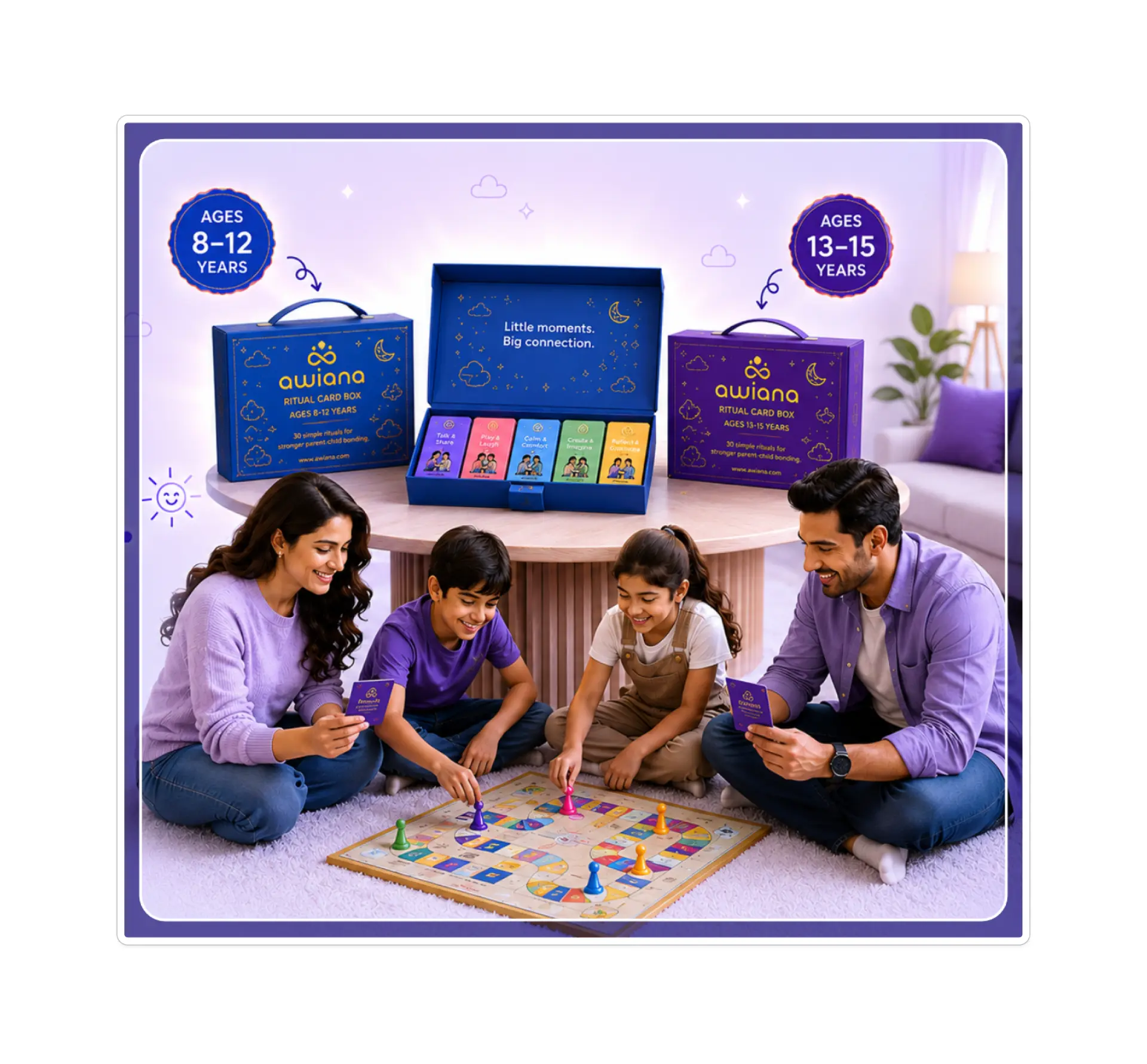
AWIANA
Family Wellbeing · Physical + Digital Product
- Problem
- Exhausted parents struggle to create meaningful daily connection time.
- Design response
- A 15–20 minute family ritual system combining physical cards with a companion digital experience.
- Evidence
- Research identified mental fatigue, lack of time, lack of energy, screen preference, and activity fatigue as the major barriers.
Beyond the interface.
I'm interested in products that improve everyday human experiences — especially where technology, learning, family, and behavior intersect. Outside individual screens, I enjoy exploring ideas, communities, physical-digital products, and the small behavioral details that decide whether something actually gets used.