Back to projects

Decoded DFC

Rebuilding Learner Momentum Through Strategic UX Design

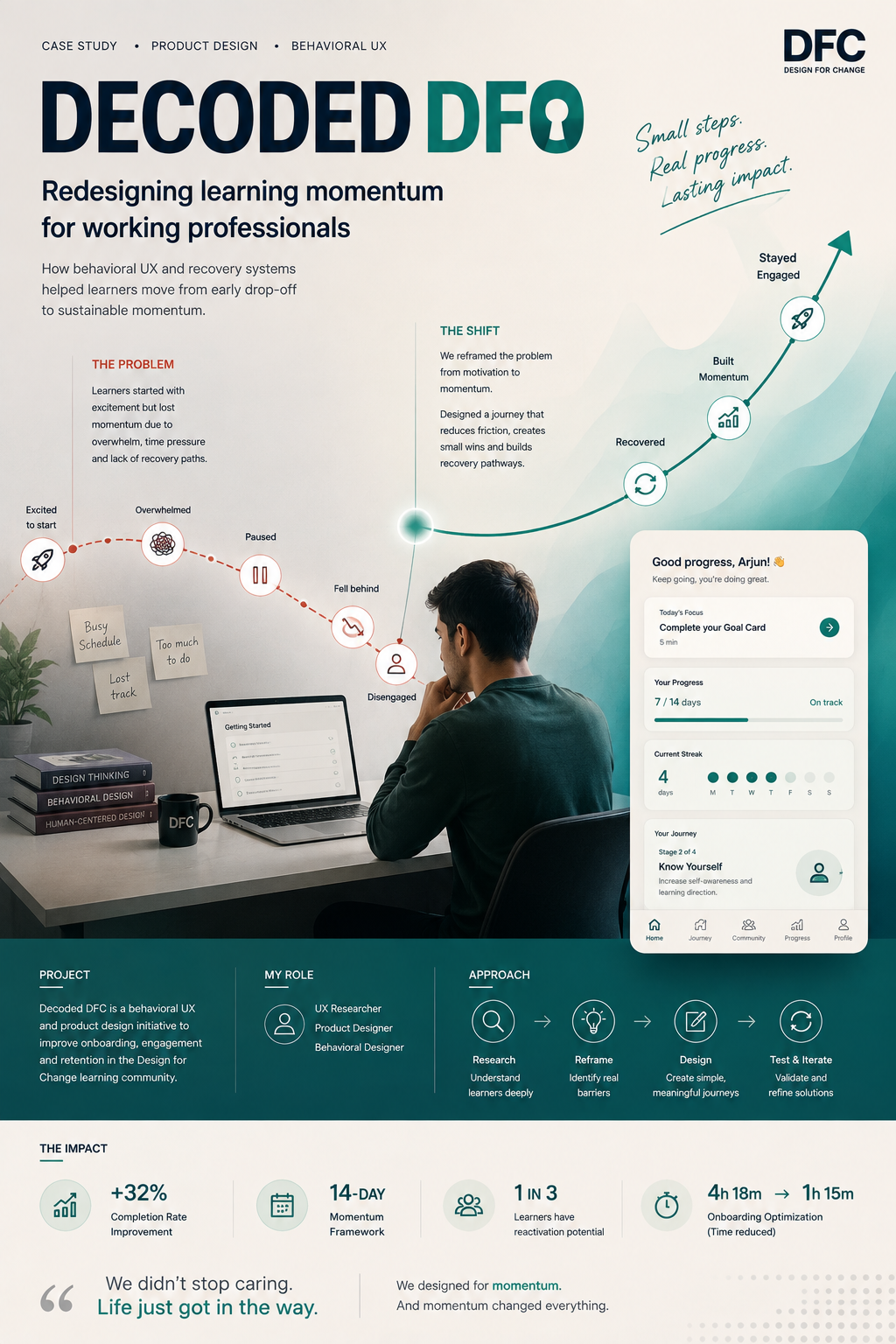
Redesigned learner onboarding to reduce cognitive overload and improve engagement — matching the product's rhythm to how working professionals actually learn.

UX ResearchLearning Experience DesignBehavioral DesignProduct Strategy
Role
Product Designer · UX Researcher
Context
Onboarding redesign · End-to-end
HistoryWhere this began

Project Overview

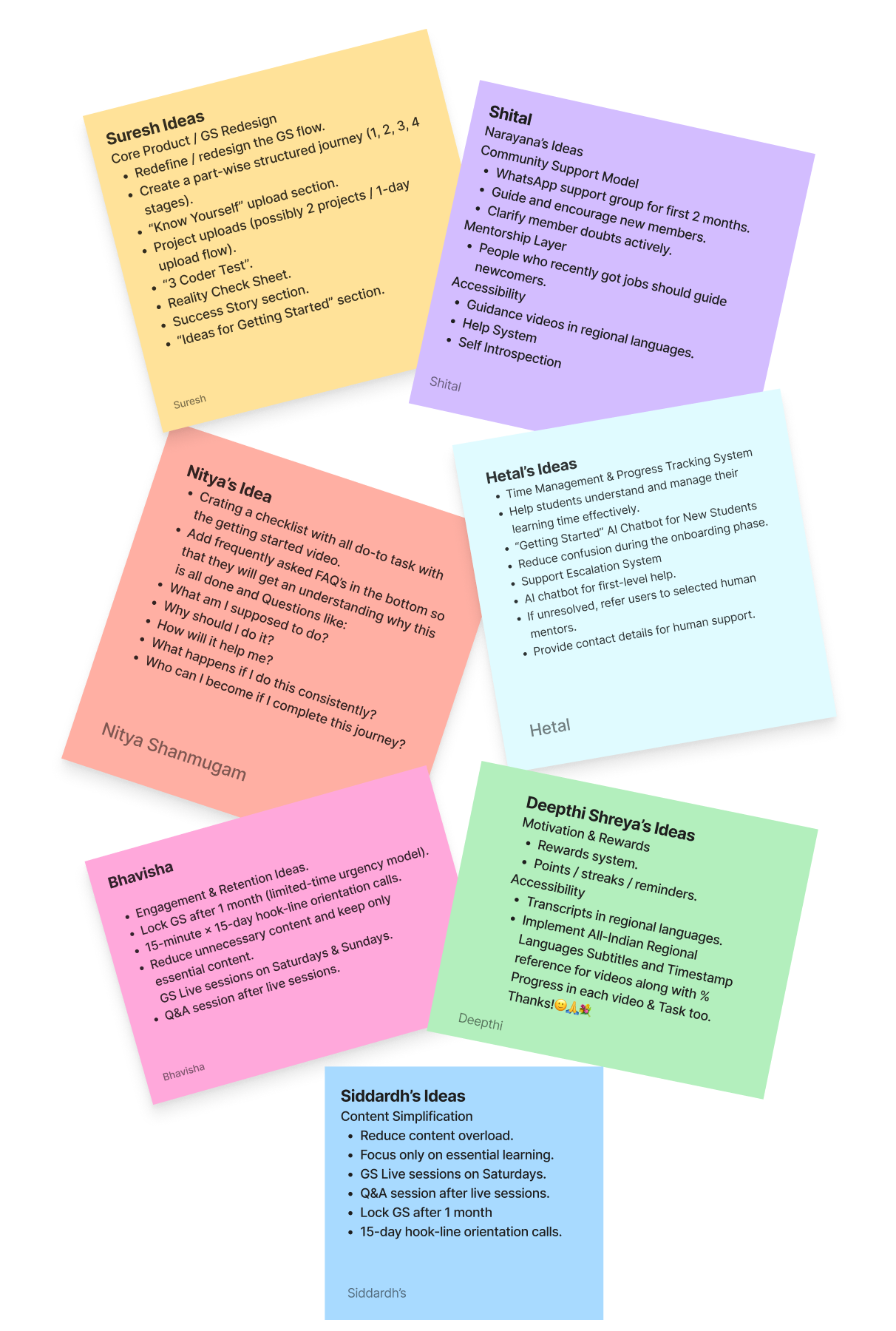
Decoded DFC is a learning product for working professionals. Strong content was not translating into completion — new learners arrived motivated but lost momentum within the first week.

I led research and redesigned the onboarding experience to reduce cognitive overload, clarify where to begin, and rebuild momentum around realistic schedules.

GeographyThe landscape learners moved through

Problem

The original 7-day onboarding assumed uninterrupted daily study. For working professionals juggling jobs and life, that pace created pressure, guilt, and early drop-off rather than progress.

  • No obvious starting point after sign-up
  • Too much content surfaced at once
  • First-week drop-offs concentrated around day 3–4
  • A 'lifetime membership' mindset that quietly removed urgency
ChemistryResearch methods & what reacted

Research

I combined quantitative reach with qualitative depth to understand both the scale and the emotion behind the drop-off.

162
Survey participants
12
In-depth interviews
BiologyHuman behavior & needs

Key Insights

  • Lack of time was the dominant barrier — not lack of motivation
  • Content overload made learners freeze before they started
  • A confusing starting point eroded early confidence
  • First-week experience predicted long-term retention
  • The lifetime-access mindset led to 'I'll start later' indefinitely
MathematicsThe numbers behind the work

The Numbers

235+
Learner touchpoints
162
Survey participants
71%
Call response rate
+32%
Completion improvement
PhysicsThe forces & friction at play

Behavioral Forces & Strategy

Rather than adding features, I restructured the experience around momentum. Onboarding became a guided, staged path with a single focus at each step and a realistic timeframe that respected working schedules.

  • Pace the journey to real-life availability, not ideal availability
  • Give every learner one clear next action
  • Reduce visible surface area early, reveal depth progressively
  • Turn lifetime access into early momentum, not deferral
Design EngineeringKey product decisions

Key Product Decisions

Expanded onboarding from 7 days to 14 days to match real working-professional behavior — trading artificial speed for sustainable momentum and completion.
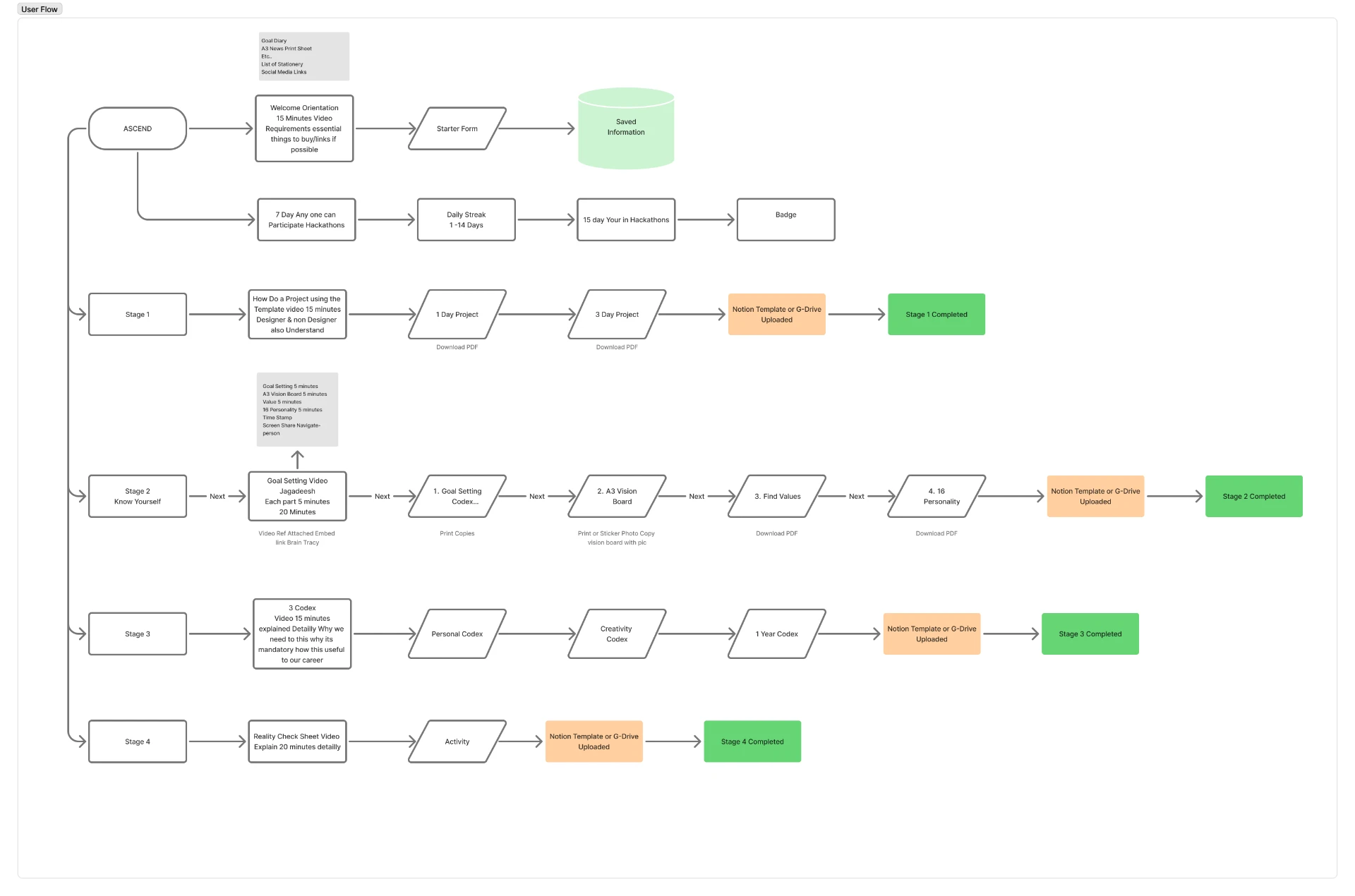
  • Four structured learning stages replacing a flat content dump
  • A 14-day momentum challenge to anchor the early habit
  • Progressive disclosure to cut first-session cognitive load
  • A persistent, single 'next step' for every learner
Design EngineeringUser flow

User Flow

The redesigned flow moves from a focused welcome, into a paced stage-by-stage path, with the 14-day challenge running alongside as a momentum spine.

Onboarding flow — Welcome → Stage 1–4 → 14-day momentum challenge
Design EngineeringWireframes

Wireframes

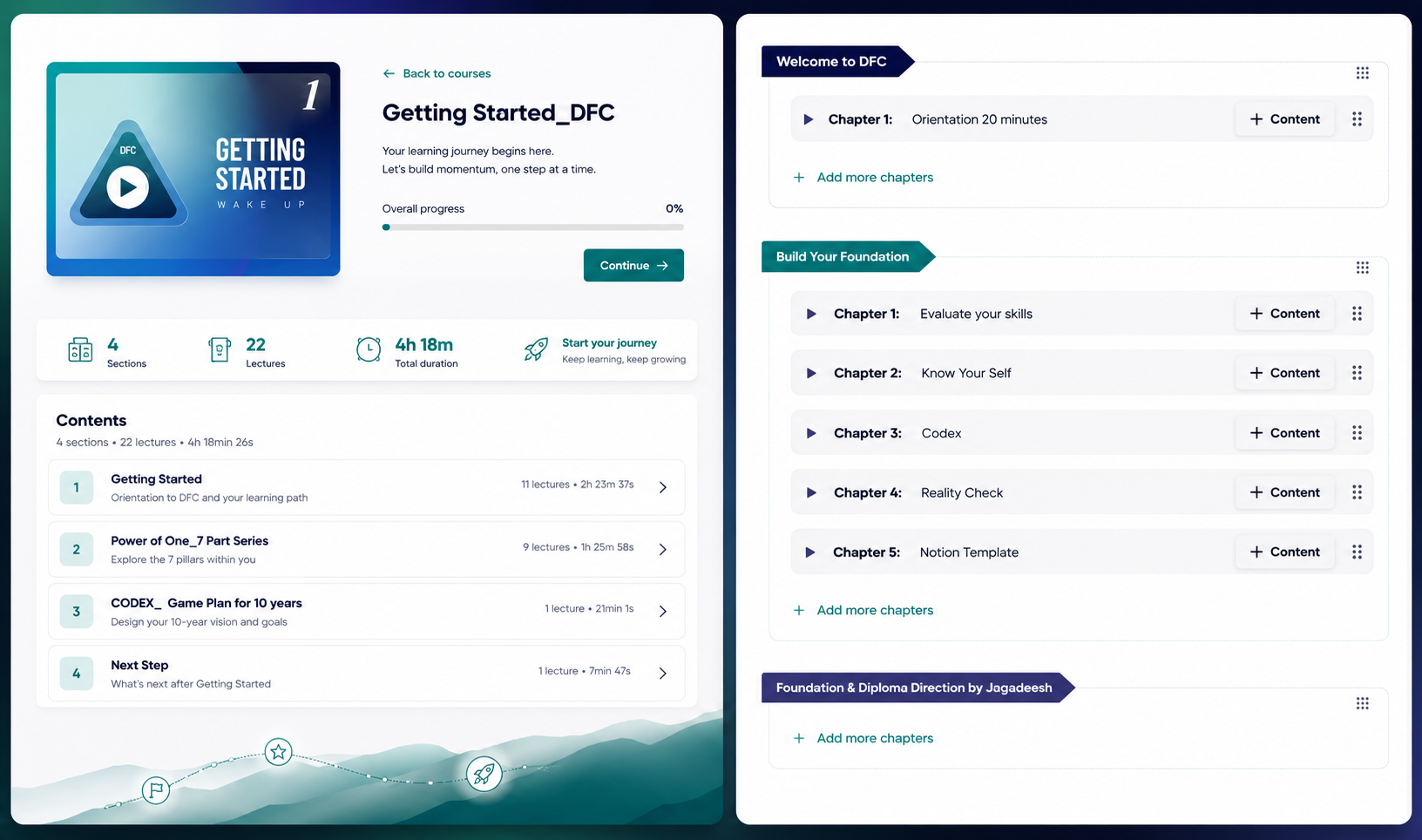
Low-fidelity wireframes prioritised clarity of the next action and a calm, uncluttered first session.

Wireframe set — staged onboarding + daily momentum view
Design EngineeringFinal solution

Final Solution

A calm, staged onboarding experience that meets learners where they are: clear starting point, realistic pacing, and a visible sense of progress that compounds across two weeks.

Final UI — staged learning path with momentum challenge
STARSituation · Task · Action · Result

STAR Summary

Situation

A learning product for working professionals had strong content but lost motivated learners within the first week of a 7-day onboarding.

Task

Diagnose the early drop-off and redesign onboarding to rebuild momentum around real working-professional schedules.

Result

68% Week-1 drop-off identified and reframed into a 14-day momentum journey, lifting completion by ~32%.

Action

  • Planned and ran the survey (162) and interview (12) study
  • Synthesised findings into behavioral themes and opportunity areas
  • Reframed onboarding around realistic professional schedules
  • Designed the staged learning structure and 14-day momentum challenge
TestingValidation & usability

Testing & Validation

Concepts were pressure-tested against the behavioral themes from research — checking that each step gave learners one clear next action without overload.

  • Usability testing details: To Be Added
IterationWhat we refined

Iteration

The pivotal iteration was pacing: the original 7-day onboarding was expanded to 14 days after research showed working professionals needed realistic, sustainable rhythms rather than artificial speed.

ImpactOutcomes

Impact

+32%
Completion rate
4
Structured stages
14-day
Momentum challenge
Cognitive overload
ImpactReflection

Reflection

The biggest lever wasn't more content or features — it was honoring the learner's real life. Designing for actual behavior, not ideal behavior, is what rebuilt momentum.

Next project

AWIANA

Reducing Parent-Child Disconnection Through Low-Effort Daily Rituals

View case study